





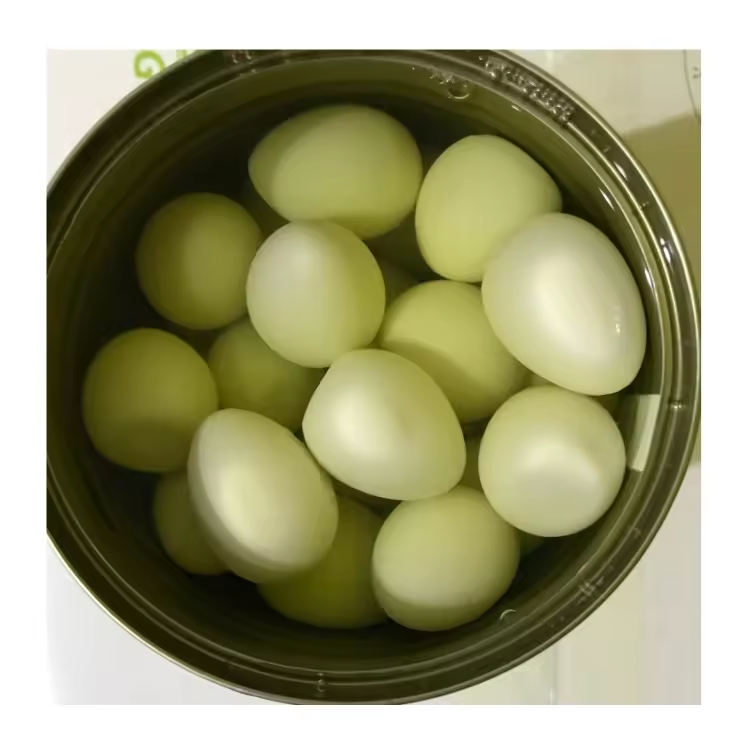
The decision to partner with a reliable peeled quail egg supplier represents a strategic choice that fundamentally alters how food service establishments approach their operations, menu development, and cost management. This is not merely a matter of convenience, though convenience certainly factors into the equation. Rather, it speaks to a broader understanding of operational efficiency, quality control, and the prudent allocation of resources in an increasingly competitive marketplace. For restaurants, catering companies, and food manufacturers throughout Singapore, the availability of pre-peeled quail eggs has transformed what was once a labour-intensive process into a streamlined component of their supply chain.
The Business Case for Pre-Peeled Products
The economics merit careful examination. Labour costs in Singapore’s food service sector continue their upward trajectory, making the efficient deployment of staff time increasingly critical to maintaining profitability. When kitchen personnel spend hours performing repetitive manual tasks such as peeling quail eggs, the opportunity cost becomes substantial. These same workers could be engaged in food preparation, customer service, or other value-adding activities that directly contribute to revenue generation.
A competent supplier of peeled quail eggs eliminates this inefficiency entirely. The eggs arrive ready for immediate use, reducing prep time from hours to minutes. For establishments serving substantial volumes, perhaps fifty to two hundred eggs daily, the labour savings alone justify the price differential between whole and pre-peeled products. Factor in reduced waste from damaged eggs and improved consistency in presentation, and the financial argument becomes compelling.
Quality Standards and Supplier Selection
Not all suppliers maintain equivalent standards of quality or reliability. The assessment process requires diligence and a systematic approach to evaluation. According to Singapore Food Agency guidelines, “All processed egg products must be handled in licensed facilities maintaining strict temperature control and hygiene protocols,” a baseline requirement that separates legitimate operators from questionable alternatives.
Key evaluation criteria include:
- Licensing and regulatory compliance documentation
- Processing facility certifications and inspection records
- Cold chain management capabilities throughout distribution
- Product shelf life and packaging integrity
- Consistency in egg size, appearance, and quality
- Responsiveness to quality concerns or delivery issues
- Financial stability and business track record
- Client references from comparable food service operations
The relationship between a food establishment and its peeled quail egg supplier extends beyond simple transactions. It requires trust, communication, and mutual understanding of business requirements and constraints.
Understanding Product Specifications
Pre-peeled quail eggs typically arrive preserved in brine solution or vacuum-sealed packaging, each method offering distinct advantages. Brine-packed products generally provide longer shelf life and may include seasoning options, whilst vacuum-sealed varieties offer convenience for operations requiring plain eggs. The suppliers specialising in pre-peeled quail eggs should clearly communicate specifications regarding packaging formats, unit counts, and storage requirements.
Shelf life considerations demand attention. Most properly processed pre-peeled quail eggs maintain quality for seven to fourteen days under appropriate refrigeration conditions. This timeline necessitates careful inventory management and order frequency calculations. Establishments must balance the efficiency of larger, less frequent orders against the risk of product aging beyond optimal freshness.
Storage Infrastructure and Handling Protocols
The introduction of pre-peeled quail eggs into an operation’s supply chain requires adequate refrigeration capacity and staff training in proper handling procedures. These eggs demand more careful management than whole eggs, as the protective shell has been removed and the product becomes more vulnerable to contamination or quality degradation.
Essential storage requirements include:
- Dedicated refrigeration maintaining temperatures between 1°C and 4°C
- Strict adherence to first-in, first-out rotation principles
- Immediate refrigeration upon delivery without exception
- Separation from raw proteins and aromatic ingredients
- Daily monitoring for any signs of spoilage or off-odours
- Proper resealing of opened containers to maintain freshness
Staff must understand these protocols thoroughly. A single lapse in temperature control or rotation discipline can compromise an entire batch, resulting in waste and potential food safety concerns.
Volume Requirements and Pricing Structures
Most bulk suppliers of peeled quail eggs structure their pricing around volume tiers, with per-unit costs decreasing as order quantities increase. A restaurant ordering five kilograms weekly receives different pricing than a catering operation requiring fifty kilograms. Understanding these pricing structures enables more informed procurement decisions and budget planning.
Minimum order quantities vary considerably among suppliers. Some accommodate smaller buyers, recognising the value of building long-term relationships even with modest initial volumes. Others focus exclusively on large-scale operations and maintain minimum thresholds that smaller establishments cannot meet. Matching supplier capabilities to actual business requirements produces more satisfactory outcomes than attempting to force incompatible arrangements.
Supply Chain Reliability
Consistency of supply assumes paramount importance. Menu planning and customer expectations both depend upon reliable availability of ingredients. A trusted peeled quail egg supplier maintains adequate inventory, manages its own supply relationships proactively, and communicates transparently about any potential disruptions well in advance.
The supplier’s own sourcing practices merit investigation. Where do they obtain their quail eggs? What relationships do they maintain with producers? How do they manage quality control at the source level? These questions reveal much about a supplier’s operational sophistication and capacity to maintain consistent quality over time.
Building Productive Partnerships
The most effective supplier relationships develop through clear communication, reasonable expectations, and mutual respect. Professional suppliers of quality peeled quail eggs value customers who communicate requirements clearly, maintain regular order patterns, and honour payment terms consistently. In return, valued clients receive priority attention during supply constraints, advance notice of pricing changes, and flexibility when genuine emergencies arise.
Regular performance reviews ensure the relationship continues meeting both parties’ needs. Are quality standards being maintained? Do deliveries arrive on schedule? Are invoicing and payment processes functioning smoothly? These conversations, conducted professionally and constructively, strengthen partnerships and resolve minor issues before they escalate.
For food service establishments committed to operational excellence and prudent resource management, selecting a dependable peeled quail egg supplier constitutes a strategic decision worthy of thoughtful analysis and ongoing attention.