
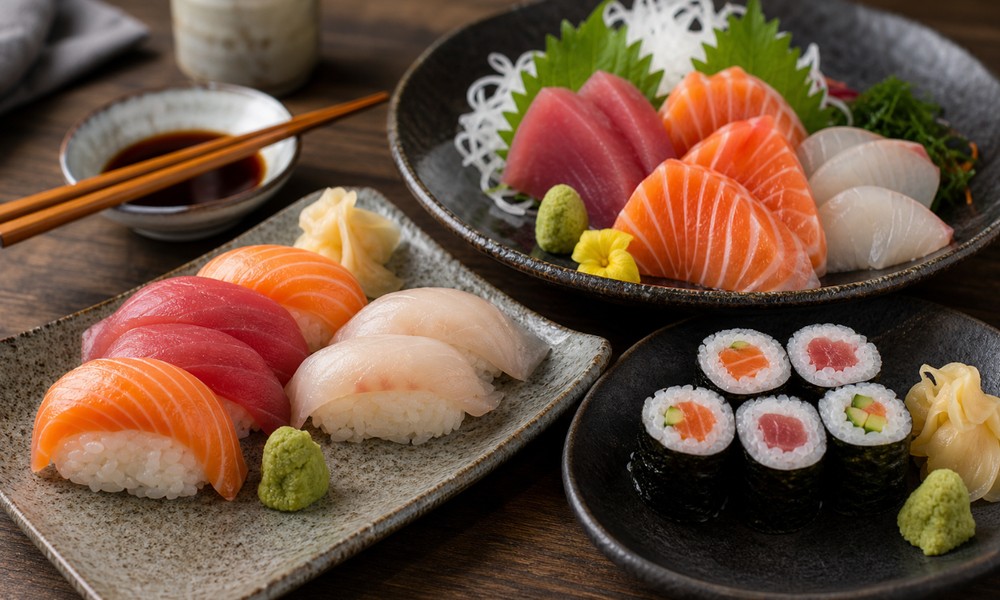
If you are new to Japanese food, the menu can feel a little confusing at first. Nigiri, sashimi, and maki may appear close to the same thing, especially when fish is involved. But each one has a different style, texture, and way of eating.
The keyword to remember is this. Nigiri uses rice. Sashimi does not. Maki is rolled with seaweed.
Understanding nigiri vs sashimi vs maki helps you order with more confidence and enjoy the meal better.
What Is Nigiri?
Nigiri is a small mound of vinegared sushi rice topped with fish, seafood, egg, or another topping. The rice is shaped by hand, then the topping is placed over it. Some pieces may include a small brush of sauce, a little wasabi, or a thin strip of seaweed to hold everything together.
Nigiri is all about balance. You get the softness of the rice, the clean flavor of the fish, and a small touch of seasoning in one bite. Common toppings include tuna, salmon, shrimp, eel, yellowtail, and scallop.
Order nigiri when you want to taste the fish clearly but still want the comfort of rice. It is a good choice if you enjoy simple flavors and want something more filling than sashimi.
What Is Sashimi?
Sashimi is sliced fish or seafood served without rice. It is not technically sushi because sushi depends on seasoned rice. Sashimi focuses on the cut, freshness, texture, and natural flavor of the seafood.
The slices are usually clean and simple. They may be served with soy sauce, wasabi, shredded daikon, or shiso leaves. Since there is no rice or seaweed, the fish stands on its own.
Order sashimi when you want the purest seafood experience. It is a good choice if you want something lighter, lower in carbs, or more focused on texture. Sashimi also works well when you already know what fish you like.
What Is Maki?
Maki is rolled sushi. It usually includes rice and fillings wrapped in nori, which is dried seaweed. The roll is sliced into small rounds. Maki can include raw fish, cooked seafood, vegetables, egg, or other fillings.
Some maki rolls are simple, like tuna roll or cucumber roll. Others are larger and include several ingredients. The seaweed adds a savory flavor and a slightly crisp, chewy texture. The rice holds everything together.
Order maki when you want variety in one bite. It is a good choice for sharing because rolls are easy to split at the table. Maki is also a friendly option for people who are still getting used to raw fish because many rolls include cooked items or vegetables.
The Main Difference: Cuts, Rice, and Seaweed
The easiest way to compare them is by structure.
Nigiri is fish or another topping over rice.
Sashimi is sliced fish without rice.
Maki is rice and fillings rolled in seaweed.
The cut matters most in sashimi because the fish is the whole dish. In nigiri, the cut still matters, but it works with the rice. In maki, the cut is part of a larger mix with rice, nori, and fillings.
When to Order Each
Choose nigiri when you want a clean, classic sushi bite.
Choose sashimi when you want to focus on the fish itself.
Choose maki when you want rolls, variety, and shareable pieces.
If you are unsure, order a small mix. Try a few pieces of nigiri, a few sashimi slices, and one maki roll. That gives you a clear sense of the differences without overthinking the menu.
Final Thoughts
Nigiri, sashimi, and maki each offer a different way to enjoy Japanese seafood. Nigiri is balanced and simple. Sashimi is pure and focused. Maki is rolled, flexible, and easy to share.
Once you understand the role of rice, seaweed, and cuts, ordering feels much easier. And honestly, the best choice depends on what kind of bite you want that day.
This post was written by a professional at Fortu. Fortu stands out among the top Restaurants St Petersburg FL, offering an elevated Pan-Asian dining experience in the heart of St. Petersburg, Florida. Celebrating Asia’s vibrant and diverse culture, Fortu introduces bright and bold flavors to a bright and bold city with a menu of locally and sustainably sourced options, from small bites to hearty delicacies. Whether winding down from a beach day or celebrating a special occasion, guests can enjoy a lush, alluring atmosphere and an authentic taste of Asia’s divine cuisine at one of the finest Pan-Asian Restaurant In Downtown St Petersburg FL.