





The coffee machine industry has found its most fertile ground in the foodservice sector, where demand for consistent, high-quality coffee continues to accelerate across restaurants, hotels, quick-service chains, and institutional catering. As diners and guests raise their expectations for beverage quality, foodservice operators are investing in commercial coffee brewing equipment that can deliver barista-standard drinks at scale – and the opportunities for growth have never been more compelling.
Why Foodservice Is the Engine of Industry Growth
Coffee has become an essential revenue driver in foodservice. It is no longer a minor add-on to a meal but a standalone profit centre with attractive margins. A well-prepared espresso or flat white commands a premium price, and customers willingly pay for quality. For operators, this means that the right coffee brewing system can generate substantial returns on investment, often paying for itself within months.
The numbers tell a clear story. The global foodservice coffee equipment market is projected to grow at over seven per cent annually through 2030, outpacing growth in the domestic segment. In Singapore, where eating out is a way of life rather than an occasional indulgence, this growth rate is even higher. Hawker centres, food courts, and casual dining establishments are all upgrading their coffee capabilities to meet evolving tastes.
“In Singapore, we have noticed that even traditional food establishments are now investing in quality coffee equipment,” observes Mei Ling Koh, Operations Director at a prominent Singapore food and beverage group. “The customer who orders a plate of chicken rice now also expects a properly made latte.”
Key Segments Driving Demand
Hotels and Hospitality
The hotel sector represents one of the largest and most demanding markets for commercial coffee machine solutions. Lobby cafes, breakfast buffets, executive lounges, and in-room amenities all require different types of equipment, from high-volume bean-to-cup machines to single-serve capsule systems. Hotels compete fiercely on guest experience, and coffee quality has become a measurable differentiator in guest satisfaction surveys and online reviews.
Premium hotels in Singapore increasingly partner with specialty roasters and equipment providers to create bespoke coffee programmes. These programmes encompass machine selection, bean curation, staff training, and ongoing quality assurance – a comprehensive approach that elevates the entire guest experience.
Quick-Service Restaurants and Convenience Stores
The quick-service segment has undergone a coffee revolution. Major chains now position their coffee offerings as direct competitors to dedicated cafe brands, investing in high-speed espresso machines capable of producing drinks in under 30 seconds. Convenience stores, too, have embraced self-serve coffee stations equipped with fully automatic barista machines that deliver surprisingly good results.
This segment values:
- Speed of service and high throughput capacity
- Minimal operator training requirements
- Easy cleaning and low maintenance demands
- Compact footprints that fit within existing counter layouts
Co-Working Spaces and Corporate Offices
The modern workplace treats coffee as infrastructure rather than a luxury. Co-working spaces and corporate offices across Singapore install premium coffee brewing equipment to attract tenants, boost productivity, and create communal gathering points. The machines in these environments must be intuitive, reliable, and capable of serving diverse drink preferences throughout the day.
Technology Enabling Foodservice Growth
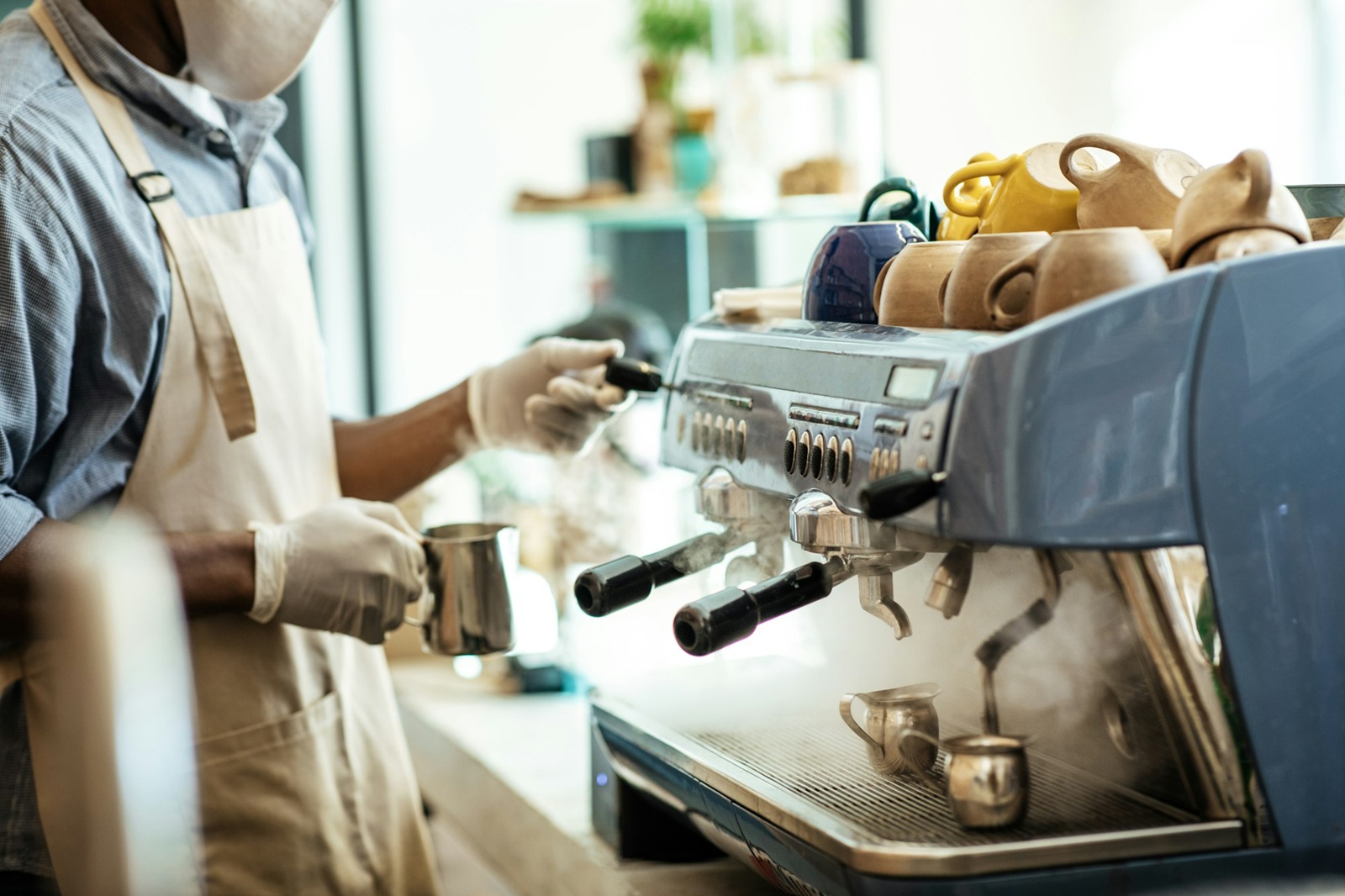
Several technological advances have made it practical for foodservice operators to deliver cafe-quality coffee without employing dedicated baristas. Fully automatic bean-to-cup machines handle grinding, dosing, tamping, extracting, and milk frothing without human intervention. Operators simply load beans and milk, and the machine does the rest.
Telemetry systems built into modern machines provide real-time data on consumption patterns, machine health, and consumable levels. This data enables operators to:
- Forecast bean and milk requirements accurately
- Schedule preventive maintenance during off-peak hours
- Identify underperforming machines that may need recalibration
- Track revenue per machine to assess return on investment
These capabilities transform the coffee machine from a simple appliance into a managed asset that contributes measurably to the business.
Overcoming Barriers to Adoption
Despite the clear opportunities, some foodservice operators hesitate to invest in premium coffee equipment. Common concerns include high upfront costs, complexity of operation, and the burden of ongoing maintenance. Rental and subscription models have emerged as effective solutions to these barriers, allowing operators to access top-tier equipment for predictable monthly payments that include servicing and consumable supplies.
Training is another critical factor. The best equipment providers offer comprehensive onboarding programmes that cover machine operation, basic troubleshooting, and drink preparation techniques. In Singapore, where staff turnover in foodservice is notoriously high, providers that offer repeat training sessions and accessible online resources deliver genuine value.
Water Quality and Environmental Factors
Water quality significantly affects both coffee taste and machine longevity. In foodservice environments, water filtration systems are essential to prevent scale buildup and ensure consistent extraction. Leading providers include water treatment solutions as part of their total package, recognising that the machine is only one component in a broader coffee ecosystem.
The Road Ahead for Foodservice Coffee
The convergence of consumer demand, technology, and flexible business models creates a landscape rich with opportunity. Foodservice operators who invest thoughtfully in their coffee programmes – selecting the right equipment, partnering with knowledgeable providers, and committing to quality – will differentiate themselves in an increasingly competitive market.
Singapore, with its dense population, diverse culinary scene, and high coffee consumption per capita, offers particularly attractive conditions for growth. The foodservice segment here serves as a bellwether for broader regional trends, and the lessons learned in this market will shape strategies across Southeast Asia.
For operators ready to seize these opportunities, the coffee machine industry offers solutions at every scale and price point, making it easier than ever to deliver exceptional coffee as a core part of the dining experience.