
Most of us have good intentions when it comes to eating well. We bookmark recipes, load up on groceries every Sunday, and tell ourselves this week will be different. But somewhere between the packed aisles, the confusing labels, and the produce that wilts by Wednesday, things fall apart.
Here is something worth considering: shopping at a local farm market once a week can change the way you eat more effectively than any diet plan or meal kit subscription. Not because it is a magic fix, but because it quietly rewires the habits, choices, and relationship with food that most people never stop to examine.
This is not about perfection. It is about small, consistent shifts that add up to something real.
You Start Buying Food You Actually Want to Cook
Walk into a grocery store and you are surrounded by thousands of options. Most of them are packaged, processed, or engineered to grab your attention. By the time you reach the produce section, decision fatigue has already set in, and you default to the same six things you always buy.
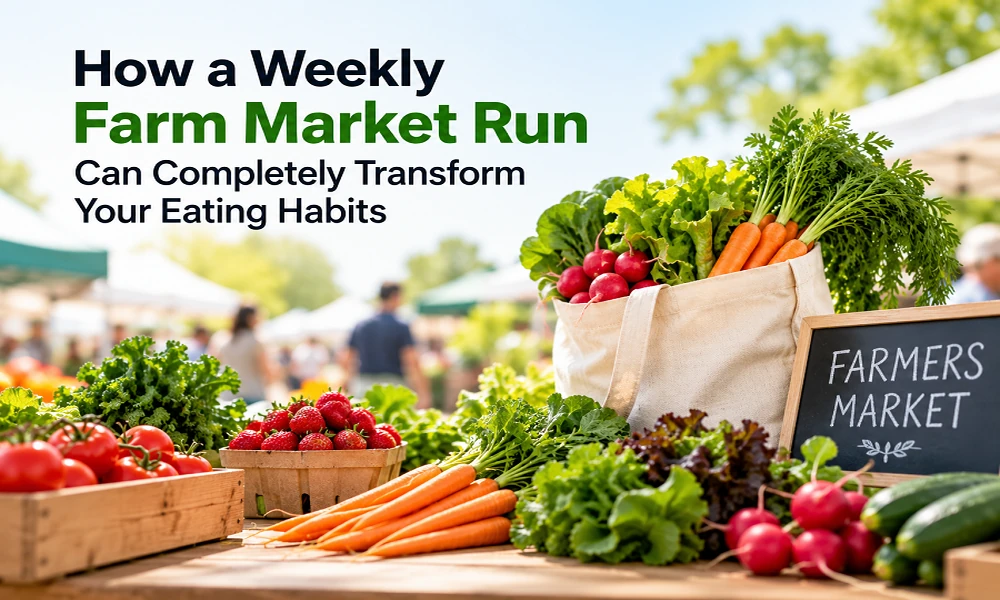
A farm market works differently. The selection is smaller and more intentional. You see what is ripe, what is fresh, and what is in season. And when produce looks genuinely good, like a flat of just-picked strawberries or ears of corn that were harvested that morning, you actually want to cook with it.
That shift matters more than it sounds. When food looks appealing and smells fresh, you build meals around it instead of letting it sit in the back of the fridge.
Seasonal Eating Becomes Natural Instead of Forced
One of the most common pieces of nutritional advice is to eat seasonally. It sounds simple, but most people have no idea how to actually do it when every grocery store carries the same produce year-round regardless of the calendar.
Farm markets make seasonal eating the default. You cannot buy a tomato in February because there are no tomatoes in February. You cannot find zucchini in November because nobody is growing it. What is available is what is fresh, and over time, your meals naturally begin to follow that rhythm.
This is not a sacrifice. If anything, it makes food more interesting. You start to look forward to the first strawberries of June or the sweet corn that shows up in late summer. Your palate adjusts, your cooking changes, and you stop eating the same things on autopilot.
Eating seasonally also tends to be cheaper. When produce is in peak supply, prices drop and quality goes up. That combination is hard to beat.
You Cook More Because the Ingredients Are Worth It
There is a direct connection between ingredient quality and how motivated you are to actually cook. When you bring home tired supermarket vegetables, cooking feels like a chore. When you bring home something genuinely fresh, the motivation to do something with it comes more naturally.
Fresh farm eggs are a good example. If you have ever cooked with truly fresh eggs, meaning eggs that are only a few days old, you already know the difference. The yolk stands taller. The white holds together better. The flavor is noticeably richer. That kind of quality makes a simple scramble feel like something worth sitting down to enjoy.
The same principle applies to fresh-picked vegetables, locally baked bread, or raw honey used in place of refined sugar. When the ingredients are good, simple cooking becomes satisfying cooking.
Your Relationship with Food Slows Down in a Good Way
Modern grocery shopping is fast by design. Grab what you need, check out, leave. There is nothing wrong with efficiency, but that speed comes at a cost. Most people have no connection to where their food came from, who grew it, or what makes one product better than another.
Farm markets operate at a different pace. You might talk to the person who grew your tomatoes. You might learn that the raw honey in that jar came from hives kept on a property just a few miles away. You might notice that the baked goods behind the counter were made that morning, not sealed in plastic two weeks ago.
That kind of context changes how you think about food. It becomes less transactional and more meaningful. You stop treating meals as something to get through and start treating them as something to actually enjoy.
This slower relationship with food is one of the most underrated health benefits of farm market shopping, and it does not show up on any nutrition label.
You Spend Less Money on Food You Do Not Actually Eat
The average household wastes a significant amount of food every week. A lot of that waste comes from buying too much at once, especially when bulk deals and oversized packages make it feel like the smart financial move.
Farm market shopping tends to be more intentional. You buy what you need for the next few days rather than a full week’s worth of produce that slowly deteriorates. You spend a little more per item sometimes, but you waste far less, and you are more likely to actually use what you bought.
Over time, that shift in buying behavior can reduce your overall grocery spending while also improving what ends up on your plate.
Small Changes Build a Bigger Habit
The real transformation that comes from weekly farm market shopping is not dramatic. It does not happen all at once. It is the accumulation of small choices: picking up a jar of raw honey instead of reaching for processed syrup, trying a vegetable you have never cooked before because it looked good, choosing a fresh-baked loaf over sliced bread in a bag.
Each of those choices is small on its own. But over weeks and months, they add up to a completely different way of eating. You become someone who cooks more, wastes less, eats fresher food, and genuinely enjoys the process of feeding yourself and your family.
That is the quiet power of a weekly farm market run. It does not overhaul your life. It just gradually makes your relationship with food a lot better.
Ready to Give It a Try?
If you have never made farm market shopping a regular habit, start simple. Pick one day a week. Bring a bag and a rough idea of what you want to cook. Do not over-plan. Let what looks fresh guide you.
You may be surprised how quickly your eating habits start to shift on their own.