
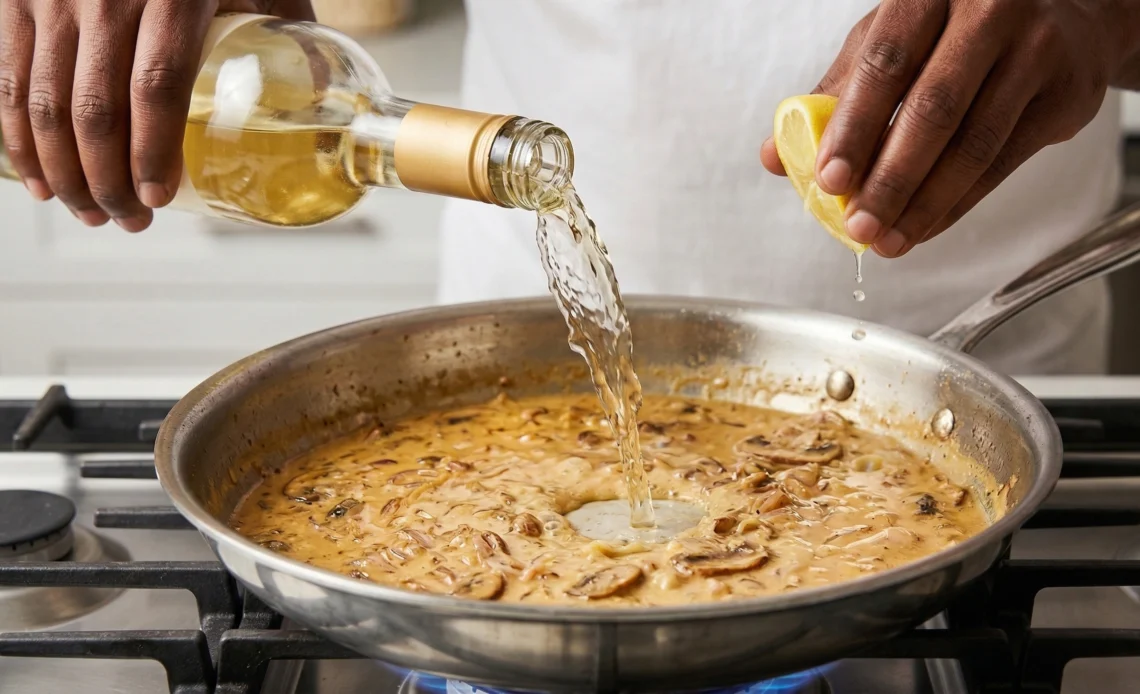
Cream has a way of making food feel instantly comforting. It gives pasta sauces their silky finish, turns an ordinary soup into something luxurious and lends risotto the kind of texture that keeps diners reaching for another spoonful. But richness has a limit. Without contrast, a creamy dish can quickly become heavy, muted or simply tiring to eat. This is where acidity earns its place in the kitchen. Lemon, wine, vinegar, tomatoes and fermented ingredients can provide the sharp counterpoint that rich food needs. The aim is not to make dinner taste sour. It is to create enough tension on the plate to keep each mouthful interesting.
Why richness needs something sharp
Creaminess is more complicated than simply adding dairy. Sensory research links the perception of creaminess to several factors, including texture, fat and flavor. Fat also influences how aroma compounds are carried and released, helping explain why butter, cream and cheese can give dishes such a lingering impression.
That lingering richness is exactly why an acidic element can be so useful, both in the food and in the glass. A squeeze of citrus can sharpen a buttery seafood sauce, while a fresh, structured wine can provide contrast between bites. For a special dinner, those planning to order Louis Roederer Cristal Champagne online could consider dishes such as scallops or poultry in restrained creamy preparations. Louis Roederer describes Cristal as suited to gastronomic pairings and specifically suggests scallops, Bresse poultry and sweetbreads among possible matches.
Acidity works best when it is noticeable through its effect rather than its sourness. A cream sauce finished with lemon should still taste primarily of cream, stock, herbs or whatever ingredients form its base. The citrus is there to stop those flavors from becoming blurred.
The small addition that can rescue a heavy sauce
Anyone who cooks regularly knows the moment: the seasoning seems correct, the consistency looks right, yet the sauce tastes strangely flat. Adding more salt is often the first instinct. Sometimes, however, what is missing is acidity.
A little lemon juice added to a cream sauce can change its character immediately. White wine can play a similar role when reduced before cream is introduced. Depending on the recipe, cooks can also turn to wine vinegar, cider vinegar, tomatoes, mustard or cultured dairy products.
The choice matters because acids do not all taste alike. Lemon brings a clean citrus character that naturally suits fish and many green vegetables. Wine vinegar can be more assertive, while tomatoes combine acidity with sweetness and savory depth. Mustard contributes sharpness as well as spice.
Timing changes the result
When acidity enters the dish can be just as important as how much is used. Wine, for instance, is commonly reduced during cooking so that its flavors concentrate before richer ingredients are incorporated. Fresh lemon juice is often more effective near the end, where its brightness remains recognizable.
There is another practical consideration: strong acids added carelessly to dairy can cause curdling. Gentle heat, controlled quantities and gradual incorporation make it easier to maintain a smooth sauce.
The safest approach is also the simplest: add a little, taste and repeat if necessary. Acidity is much easier to increase than remove.
Some classic dishes already understand the rule
This balance between richness and sharpness is hardly a modern restaurant invention. Many familiar dishes rely on it, even when diners do not consciously notice what is happening.
Consider beef stroganoff, where sour cream brings its own tang alongside richness. Tomato-based cream sauces work because the fruit’s natural acidity pushes against the dairy. In Italian cooking, Parmigiano-rich preparations may be served alongside ingredients with brighter characteristics. Indian cuisines frequently use yogurt, tomato, tamarind or citrus to introduce acidity into rich preparations.
French cooking offers plenty of examples too. A beurre blanc combines a considerable amount of butter with a reduction typically built around wine and vinegar. The result demonstrates the principle particularly clearly: richness is the attraction, but acidity keeps it from becoming monotonous.
Drinks can continue the balancing act
The same logic extends beyond the saucepan. A rich dish does not always need an equally rich drink.
Champagne is particularly interesting at the table because its freshness can work alongside foods containing butter or cream. Louis Roederer recommends adapting pairings to the age and personality of the Champagne and advises avoiding foods that are excessively powerful or spicy. Its broader pairing suggestions include white fish, poultry, raw or marinated fish and gougères.
This does not mean every cream sauce automatically belongs beside Champagne. Intensity still matters. A delicately seasoned scallop dish is very different from pasta buried beneath blue cheese and pepper. Pairing becomes easier when neither side has to fight for attention.
Texture deserves a place in the equation
Acidity can correct richness, but texture prevents creamy food from feeling physically monotonous. A crisp breadcrumb topping over macaroni and cheese, toasted hazelnuts scattered across a velouté or fresh vegetables alongside a creamy dip all introduce another kind of contrast.
That matters because creaminess itself is strongly associated with texture and mouthfeel. A dish composed entirely of soft, smooth elements may therefore feel heavier than one containing exactly the same amount of fat but offering some crunch or freshness.
Good cooking often comes down to these small oppositions: smooth and crisp, rich and bright, warm and fresh.
When the last squeeze makes all the difference
The difference between an indulgent creamy dish and an exhausting one can be surprisingly small. Sometimes it is no more than a teaspoon of vinegar, a splash of wine or half a lemon squeezed into the pan before serving.
The key is restraint. Acidity should not erase richness; the richness is often why the dish is appealing in the first place. Instead, it gives cream, butter and cheese something to push against.
When a creamy sauce tastes seasoned but still seems dull, adding more salt or cream may only make matters worse. Taste it again, then reach for something sharp. That final touch may be all the dish was missing.