
Flexible Food Choices Can Simplify Planning, Accommodate More Guests, and Reduce Pressure on the Host
Every special event has its own guest list, schedule, venue, purpose, and atmosphere. A baby shower held in a backyard does not have the same needs as a corporate breakfast in an office. A bridal shower may prioritize presentation and conversation, while a family reunion needs food that works for several generations.
Using the same fixed menu for every occasion can create unnecessary problems. Guests may have limited choices, the food may not match the event time, and the host may end up ordering too much of certain items and not enough of others.
A custom brunch menu allows the catering plan to reflect the actual event. Hosts can select a central dish, complementary sides, beverages, ingredient options, and a service style based on the guest count and venue.
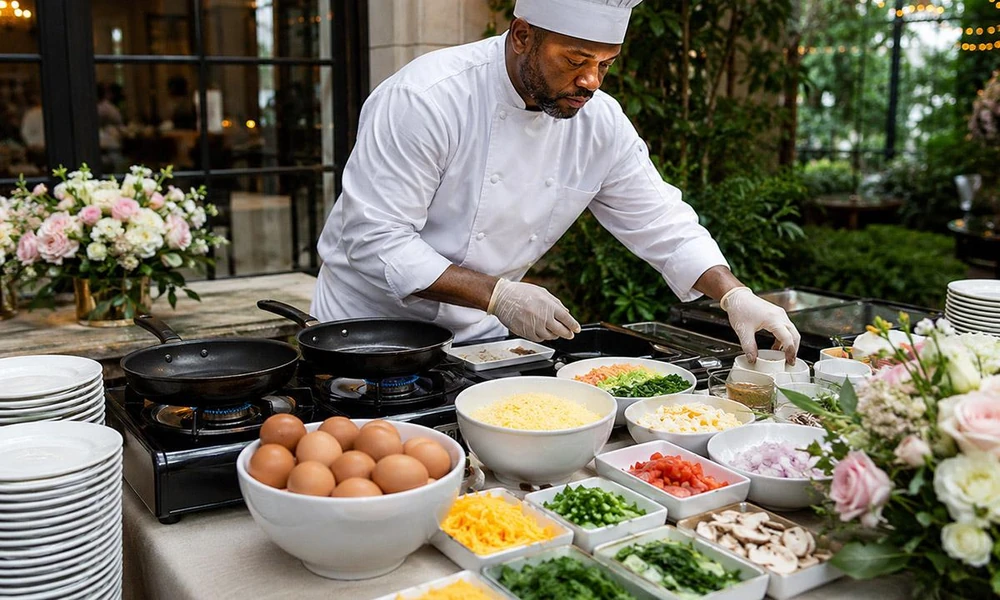
An on-site omelette station is particularly adaptable because it gives guests control within a professionally planned menu. Instead of ordering several separate entrées, the host can offer one interactive cooking experience with multiple ingredient combinations.
Customization is not about complicating the event. When handled correctly, it simplifies decision-making by focusing the menu on what the guests are most likely to enjoy.
A Custom Menu Matches the Occasion
Food should support the tone and purpose of the event. A heavy, formal meal may feel out of place at a relaxed morning shower, while a small pastry display may not be substantial enough for a family celebration held at lunchtime.
Custom brunch catering allows the host to consider when the event begins, how long it lasts, what activities are planned, and what type of experience guests expect.
A baby shower brunch might include made-to-order omelettes, fruit, breakfast potatoes, pastries, and nonalcoholic beverages. A bridal shower could use a similar foundation with a more elegant presentation and a wider selection of sides.
A corporate breakfast may prioritize efficient service, coffee, and foods that employees can eat comfortably before a meeting. A birthday brunch might include the guest of honor’s favorite ingredients and a dessert component.
Family gatherings may need simple choices for children alongside more substantial options for adults.
The menu can also reflect the venue. A home event may benefit from a streamlined setup, while an event space may support additional stations, rentals, or decorative elements.
Matching the food to the occasion prevents the catering from feeling generic. Guests may not know every decision the host made, but they notice when the meal fits naturally into the celebration.
“The easiest event menus are not necessarily the smallest. They are the ones designed around the actual people, place, and schedule.”
Customization Reduces the Need for Multiple Entrées
When hosts attempt to satisfy different preferences, they may feel obligated to order several main dishes. This increases cost, serving space, and the risk of waste.
A customizable omelette station creates variety within one central concept. Guests choose from the available vegetables, cheeses, and proteins, allowing dozens of possible combinations without requiring the host to order each one separately.
One guest may prefer a vegetarian omelette with spinach, mushrooms, and tomatoes. Another may select bacon, sausage, peppers, onions, and cheese. Someone else may request a simple option with only one ingredient.
The caterer prepares the same type of dish, but the final result is different for each person.
This format is particularly useful when the guest list includes adults, children, vegetarians, selective eaters, and people with different appetites.
Hosts should still communicate known allergies and specific dietary restrictions. Ingredient choice alone does not guarantee that a station is appropriate for every medical or dietary need. However, customization greatly improves flexibility for general preferences.
Fewer fixed entrées also make the buffet easier to understand. Guests know that the omelette station is the main dish and can select sides according to their appetite.
A Thoughtful Menu Helps Control Cost and Waste
Custom does not necessarily mean expensive. In many cases, it helps hosts spend more strategically by removing items that do not serve a clear purpose.
A catering company can help the host identify which foods are essential, which provide useful variety, and which may duplicate other menu components.
For example, a brunch menu may need a main egg dish, a potato or bread component, fruit, one or two protein options, a sweet item, and beverages. Adding several additional entrées may not improve the meal enough to justify the cost.
Customization also supports more accurate quantities. A family event with many children may need smaller portions and more simple sides. More coffee and substantial food may be needed for a corporate breakfast with mostly adults.
Made-to-order service may reduce waste because guests select the ingredients they plan to eat. Fixed plates often include items that are discarded because the guest did not want them.
Hosts should provide a realistic attendance estimate and update it before the catering deadline. Ordering for significantly more guests than expected can create unnecessary expense, while underestimating may result in shortages.
A focused custom menu makes it easier to direct the budget toward freshness, service, and the items guests will value most.
Flexible Menus Accommodate Different Appetites
Not every guest approaches brunch the same way. Some arrive hungry and expect a full meal. Others may have eaten earlier or prefer something light.
A custom menu can include both substantial and lighter choices without creating two separate catering plans.
Guests wanting a full breakfast can combine an omelette with potatoes, breakfast meats, bread, and fruit. Someone preferring a smaller meal might select a vegetable omelette and fruit. Another person may choose only a pastry and coffee.
Children can request simple omelettes or familiar sides. Older guests may appreciate smaller portions and easy-to-eat foods.
This range is particularly important for events that last several hours. Guests need enough food to remain comfortable, but the host should not assume that everyone wants the same plate.
The made-to-order format lets each person determine how rich or simple the main dish will be. The supporting menu provides additional choice.
“A flexible brunch menu respects the fact that every guest arrives with a different appetite.”
The Menu Can Be Designed Around the Event Schedule
Timing affects what should be served and how the service should operate.
An early morning event may benefit from coffee being available immediately, followed by breakfast service. A late-morning shower may use brunch as the primary meal and include both breakfast and lunch-style portions.
An open-house event may require food to remain available during a wider arrival period. A structured corporate meeting may need faster service so attendees can begin on time.
Custom planning allows the caterer to recommend a service window and setup based on these needs. A live omelette station can operate for a defined period while sides remain available nearby.
The host can arrange games, presentations, gifts, or speeches around the meal rather than treating food as a separate interruption.
For events with several activities, it may be useful to serve the main meal near the beginning. Guests are often more comfortable and attentive after eating.
A post-wedding brunch may have fluctuating arrival times as guests check out of hotels or prepare to travel. Flexible service can accommodate that pace more effectively than a plated meal beginning at one exact moment.
Custom Catering Simplifies Venue Planning
Every venue has limitations. A home may have limited kitchen capacity, an office may restrict certain equipment, and an outdoor location may require shade or weather protection.
A custom menu can be built around those practical realities.
If the venue does not have a commercial kitchen, on-site omelette catering may provide an alternative setup, subject to the caterer’s requirements. If space is limited, the menu can be streamlined to reduce the number of tables and serving areas.
For large events, staffing and service flow can be adjusted to prevent long waits. For smaller gatherings, a more compact station may fit the atmosphere better.
Hosts should provide detailed venue information, including stairs, elevators, parking, loading access, gates, power, outdoor surfaces, and event rules.
Custom planning also helps determine where beverages, sides, utensils, and guest seating should be positioned. The objective is to create a logical movement pattern that feels easy to guests.
A menu designed without considering the venue can become difficult to execute. A customized approach treats logistics as part of the catering plan from the beginning.
Professional Guidance Makes Decisions Easier
Hosts do not always know how much food to order, how many ingredients to offer, or how long service should last. Too many choices can feel just as stressful as too few.
A professional catering team can ask questions about the event and help narrow the options. The goal is to create a menu that feels personalized without requiring the host to design every detail alone.
Useful planning information includes the event type, date, venue, guest count, age range, service time, dietary considerations, and desired atmosphere.
The caterer can then recommend a combination of ingredients, sides, and service logistics based on those factors.
This guidance reduces guesswork and helps avoid common mistakes, such as ordering an insufficient meal for a lunchtime event or selecting too many dishes for the available space.
The host remains in control of the final decisions but benefits from professional experience with group service.
Frequently Asked Questions
What makes a brunch menu custom?
A custom menu is planned around the event type, guest count, venue, schedule, preferences, budget, and dietary considerations rather than using one identical package for every occasion.
How many omelette ingredients should be offered?
The appropriate number depends on the event and catering package. A balanced selection usually includes vegetables, cheeses, and proteins without creating an overwhelming display.
Are custom menus more expensive?
Not always. Customization can help hosts focus spending on useful items and remove foods that do not fit the event.
Can a brunch menu accommodate children and adults?
Yes. A combination of customizable omelettes, simple sides, and familiar foods can appeal to multiple age groups.
When should the final guest count be provided?
The catering company will establish a deadline. Hosts should communicate changes promptly and provide the most accurate final number possible.
Make the Menu Work for Your Event
A custom brunch menu can simplify special-event planning by aligning the food with the guests, timing, venue, and purpose of the gathering. Flexible choices reduce the need for multiple entrées, while professional preparation allows the host to focus on the celebration.
OC Omelette Chef offers customizable on-site omelette and brunch catering for showers, birthdays, family gatherings, corporate events, and private parties throughout Orange County. The team can help design a menu and service plan that fits the event, rather than forcing it to fit a standard menu.
Contact OC Omelette Chef to discuss your event date, venue, attendance estimate, preferred ingredients, and custom brunch catering options.